Home » Trick Yourself into Losing Weight: A Psychiatrist’s Guide to Dieting | Reviewed By Mihir Shah for The US Review of Books

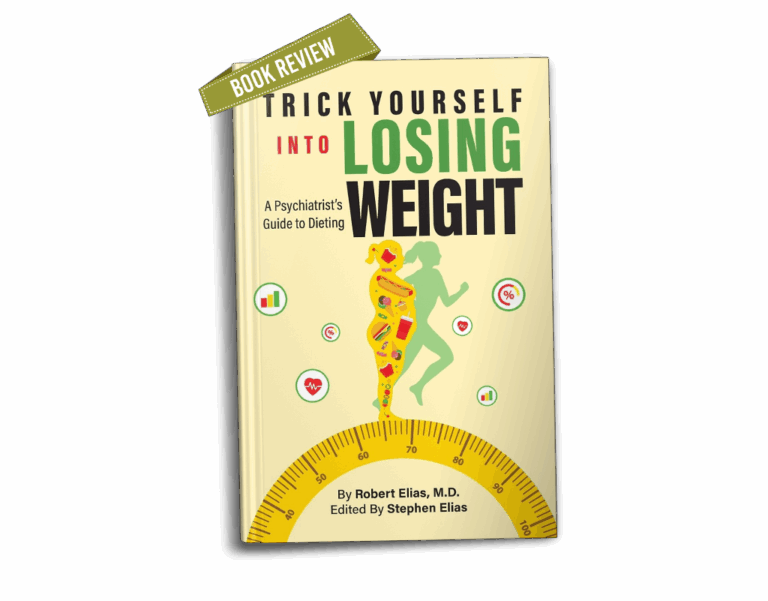
Led by the United States, the world is arguably both at its most advanced and at its most unhealthy. With revolutionary technologies and a seemingly modernized understanding of nutrition, today’s society should be progressing by leaps and bounds. In Elias’ text, audiences are on the receiving end of a simple but profound commentary on how we got here and how we find a way out that is sustainable. From the unique lens of a psychiatrist, the author’s work transcends quick fixes and magic pills and zeroes in on key areas like purposeful eating, habitual behavior, and recognizing resistance.
On a holistic level, the text urges audiences to be ultra attentive to details that deviate from the outlined path and act as resistance. Employing a seamless blend of scientific theory, research, and outcomes on various diets, and ultimately his own weight loss methods, Elias’ guidance is comprehensive, and he does not hold back. Losing weight—and keeping it off—is inevitably a marathon, not a sprint. And those who seek to sprint to their goals may even reach them, only to find themselves exhausted and unable to maintain the restrictive diets (e.g., the grapefruit diet) that initially yielded the weight loss.
More than anything else, Elias’ ability to break down complex topics for the layman stands out among weight loss books. His focus is on reframing how one looks at food, and its direct impact on potentially disastrous conditions like diabetes, high blood pressure, and heart disease. While there is clear commentary that provides insight on common weight health terms like proteins, carbs, fats, body mass index (BMI), and basal metabolic rate (BMR), the author goes a step further by getting into the mind of each individual and unraveling the “why” behind habitual tendencies pertaining to food. The focus then shifts to portion control, emphasizing that eating out or “cheat days” are not only acceptable but also recommended to prevent feelings of deprivation.
Elias brings out the inner child in everyone and guides audiences to set limits, especially when there is a psychology of attachment to one’s favorite foods. In a free-flowing manner, Elias is able to go through the process of glycolysis and food digestion, while directly tying it to the notion of hunger and the hypothalamus. From discussions on a hunger-stimulating hormone in the small intestine called ghrelin to testing the effectiveness of a diet by measuring the ketones in the urine, the author helps pull the curtain back on obesity, especially in how it has become a mainstay within the United States, coining obesity as the “American Eating Disease.”
Where most literature on weight loss emphasizes strategies that work, Elias goes to great lengths to help readers understand natural psychological defense mechanisms, like rationalizations, for our food choices. To combat these mental mechanisms, the author emphasizes patience and minor adjustments. As with anything, these small changes will snowball into greater, lasting change. For instance, he points out how an individual would normally burn calories with normal, regular movements around the home. Even the mere act of getting off the couch to change the channel contributes to that energy burn. As the work progresses, Elias advises readers to establish a food regimen they can commit to, starting with daily weight checks. He probes into the phenomena of eating out, addictive foods, and even presents vignettes that provide the reader with a pristine understanding of choices and consequences about food. Overall, Elias’s ability to cut to the core and demystify the inner workings of food science, all while maintaining a conversational tone that keeps readers engaged throughout, makes the work a meaningful read.
Source: LINK
PAYMENT METHODS